

What Loss Has Taught Me About Presence
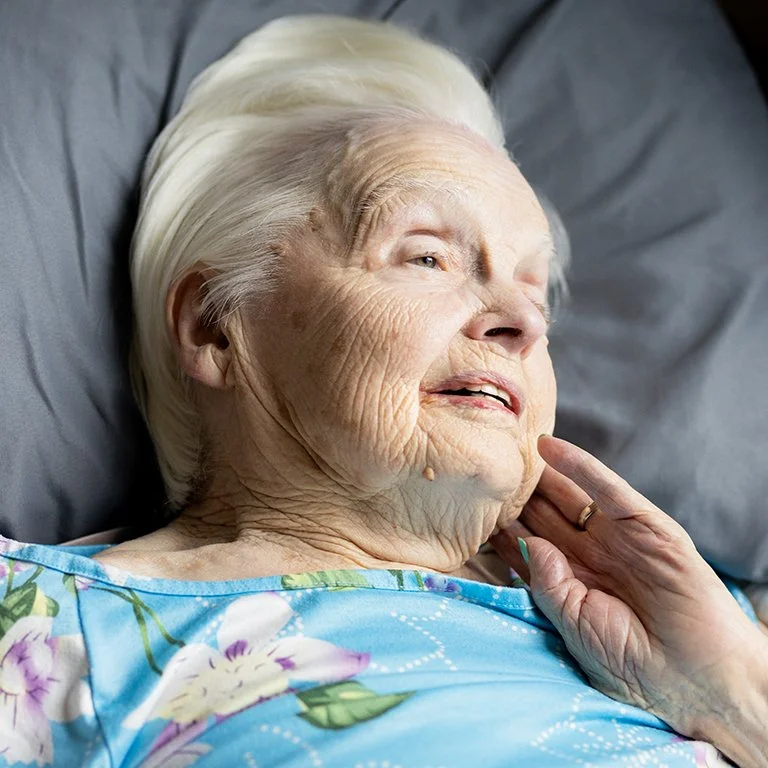
My mom in her final days.
I’ve reached an age where I no longer have the sense of permanence I once took for granted. It’s the kind of loss I didn’t know when I was young.
I remember my mom describing this experience years ago. I tried to reassure her in a way that was probably more dismissive than supportive. At the time, I couldn’t imagine it happening to me.
She listened graciously, knowing something I didn’t yet understand.
When my dad passed away in 2016, I got to know loss in an entirely new way. Losing him brought a depth of pain I hadn’t felt before, like being pierced in the chest, then left with a life-long ache.
Not long after his death, my mom had to leave the home she and my dad had known for nearly 50 years. They tended to that property like it was their fifth child.
My mom’s flower gardens overflowed with color. She was always mowing, weeding, and watering. Our property was my dad’s pride and joy. He was meticulous in his care.
Creating a home for our family was my parents’ purpose. But after my dad passed, my mom no longer had the physical strength to keep tending, no matter how much she longed to.
Over the next 8 years, I watched her lose many things: her garden, her sight, her physical and mental stability, and so many friends—some she’d known for 70 years, others for 7 months.
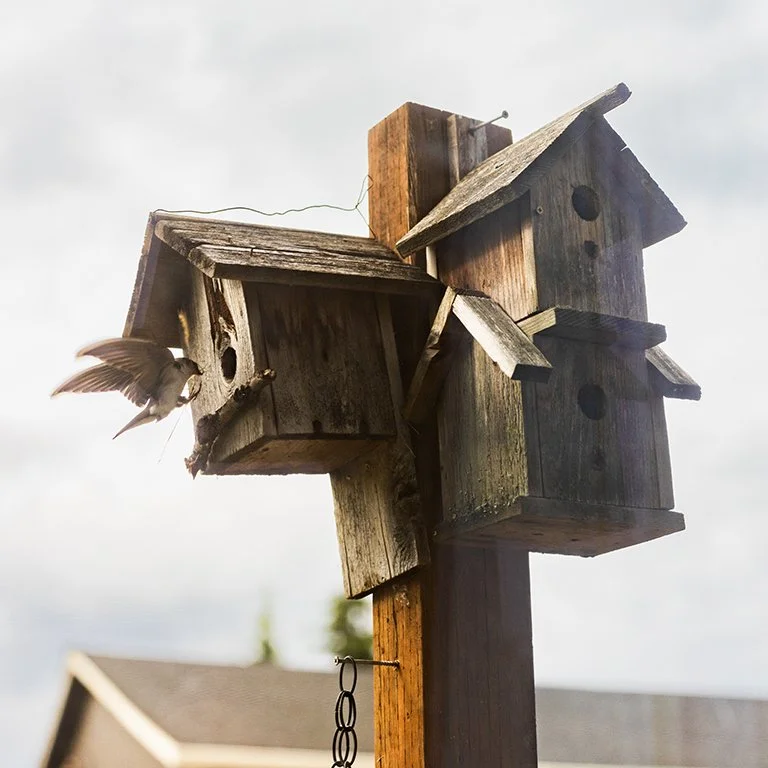
It’s been nearly 2 years since my mom died peacefully in her sleep at the assisted living home where she had her final years. When she wasn’t enthusiastically befriending the other residents, she spent her days gazing out the window beside her bed, where her birdhouses hung and where her caretakers planted flowers to make her happy.
By then, I’d spent years witnessing loss in ways I’d never imagined, and experiencing it deeply myself.
This included discovering that one of my oldest friends has a rare neurodegenerative disease called Amyotrophic Lateral Sclerosis (ALS), or Lou Gehrig’s disease. She’s one of the sunniest people I know, always smiling and radiating the depth of kindness that’s as rare as the disease overtaking her body.
I spent this Mother’s Day with her and several of our closest friends, sharing time we now understand intimately as limited.
Some losses are easy to recognize. When people die, we gather for funerals and celebrate their lives. But as we age, we also lose things that are harder to grasp: mobility, capacity, memory, time, the sense that our lives are still in front of us.
Loss is a ruthless teacher. And if we’re lucky, we learn how to spend more time being present.
Daily responsibilities can take us away from the here and now. Who else is going to work to pay the bills, care for our children and aging parents, keep food on the table? These are important endeavors.
But the more that falls away, the more clearly we see what matters, and the fewer distractions we have from what’s right in front of us.
You don’t have to wait to be present. You can simply practice shifting your focus today. Spend a few minutes more each day than the day before to be here now.
Ask yourself:
What really matters to me?
What do I value most?
Who are the most important people in my life?
What memories do I hold most dear?
What’s pulling me away from these things now?
What do I notice when I spend 30 additional minutes each day tending to what matters most?
These are the worthwhile questions. Now is the moment.