

How to Take an Awe Walk
For many years before I bought my house, I would walk around my current neighborhood, using all my senses to imagine myself living here.
Even before I moved in 20 years ago, it always felt like home.
One of my favorite things to do is take long walks in my neighborhood, remembering a time when I only dreamed of living here. My walks fill me with gratitude and wonder.
The rhythm of walking, just like the rhythm of breath, brings us back to the present. It calms mind chatter by giving us just two things to focus on:
Putting one foot in front of the other.
Inhaling and exhaling.
We’ve been talking a lot about rapid tech growth and its impact on our brains, including on our ability to hear our intuition and recognize our internal guidance system.
In our angel card draw this month, we explored this through the cards trust, faith, and courage:
Building self-trust through presence.
Having faith in the interconnectedness of all things and in a divine order we can’t see.
And being courageous enough to trust and have faith in the unknown.
Our practice of presence is simple. But simple doesn’t mean easy, especially for an overstimulated brain. And for AI users, studies show that habitual reliance on AI tools can significantly affect our cognitive independence and critical thinking skills.
Movement, like walking, helps us focus our minds, return to our bodies, and acclimate to the quiet.
It connects us to the surrounding wildlife and plant life, to others walking by, and to the rhythms of our lives. It reminds us that life is here, all around us, and that we’re all interconnected.
Our inner voice is here in this space.
So take a walk and explore your surroundings as if you were a child, noticing what you feel, hear, see, smell, and even taste. Try an unfamiliar route to get out of autopilot.
Then let the rhythm of each step and each breath connect you more deeply to the present moment.
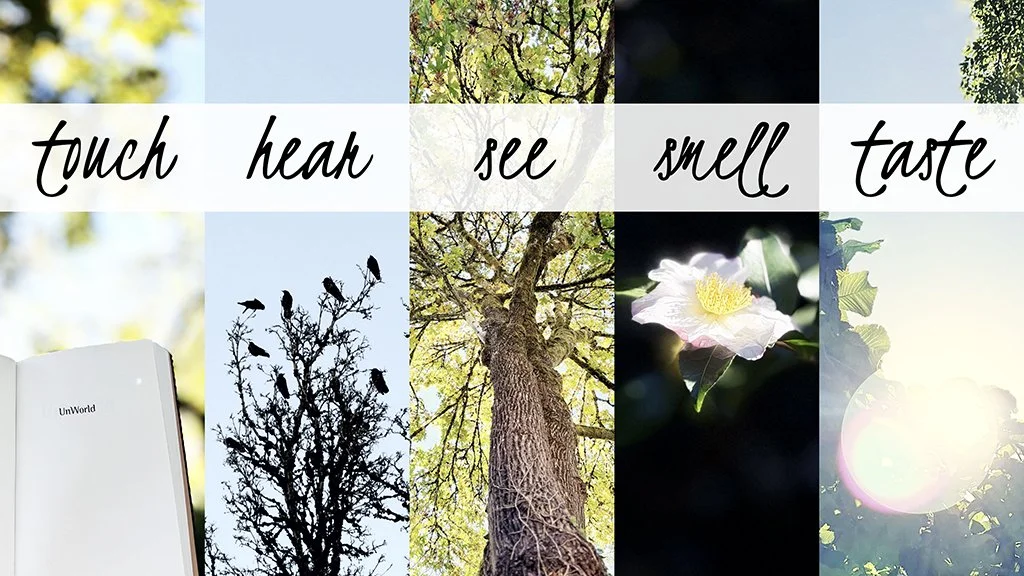
On my walk today, I felt the pages of a book I picked up at a Little Free Library, heard the cawing of crows, saw the changing of seasons, smelled the sweet scent of camellias on the breeze, and tasted the warm fall air.
Stanford Medicine calls this an awe walk. This simple practice can lead to increased compassion, gratitude, creativity, a greater sense of self (like the trust card), and a deeper sense of interconnectedness (like the faith card).
Practicing awe in everyday life, in a world where we’re constantly being told we should do more, have more, and be more, is truly transformational.